
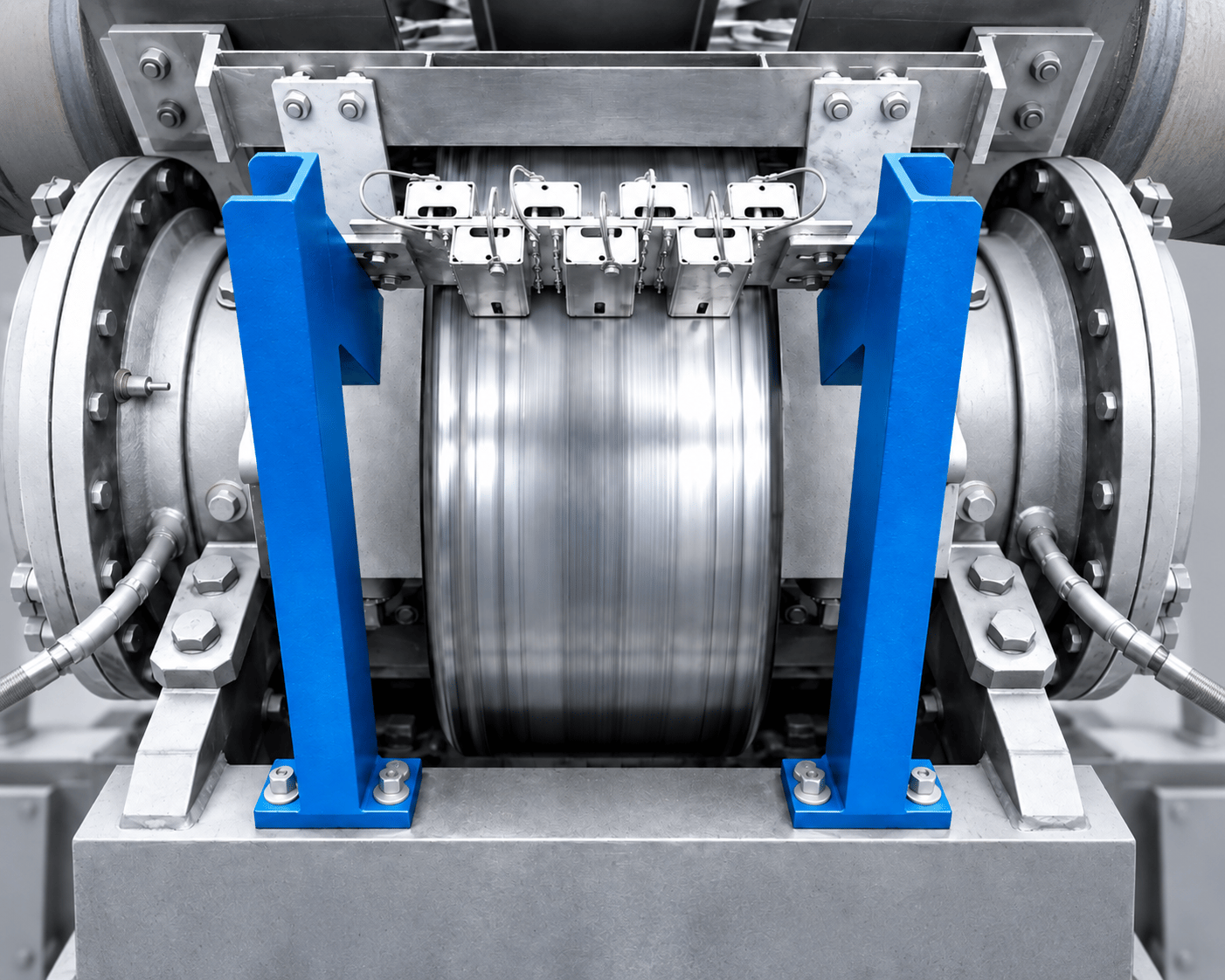
DRR dry lubrication:Protect trunnions.Preserve riding rings.
Trunnions and riding rings carry heavy loads on small contact areas. DRR protects this metal contact with a dry, solid coating for less wear on rotating equipment.
One application.
Two contact surfaces
Protection starts at the trunnion and reaches the riding ring with every revolution. The applicator maintains the coating continuously.
Assess contact and condition
Selection starts at the system: the condition of trunnions and riding rings, existing wear patterns and operating conditions are considered together.
Apply dry
An applicator continuously applies a dry, solid protective coating to the trunnion. The coating forms directly on the stressed metal surface.
Transfer to the riding ring
With rotation, the coating transfers from the trunnion to the riding ring. The coating thus acts on both surfaces in contact.
Prevent wear
The protective coating distributes contact pressure more evenly and is renewed during operation. This reduces metal wear at the trunnion-riding ring contact.
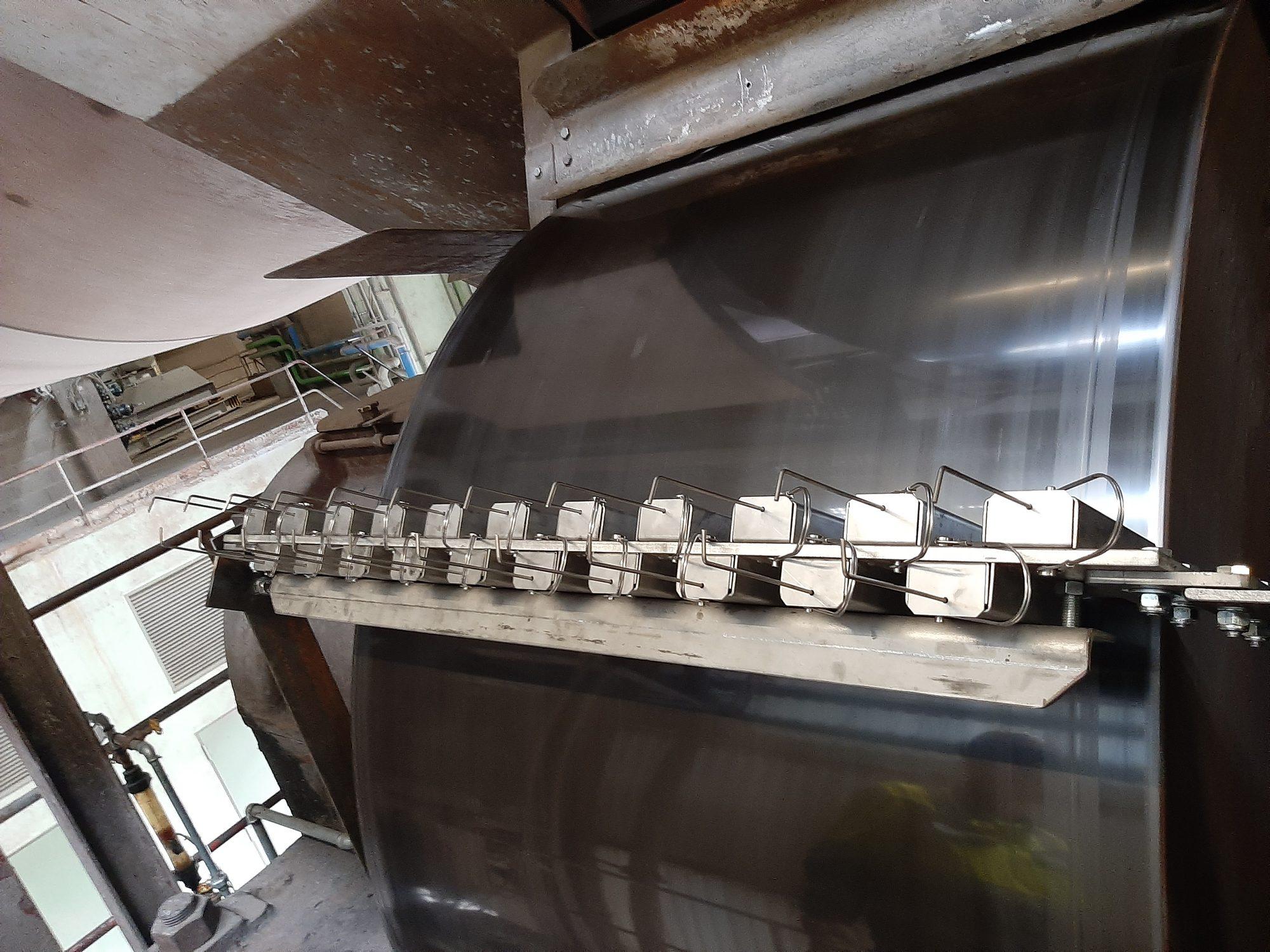
Heavy loads.
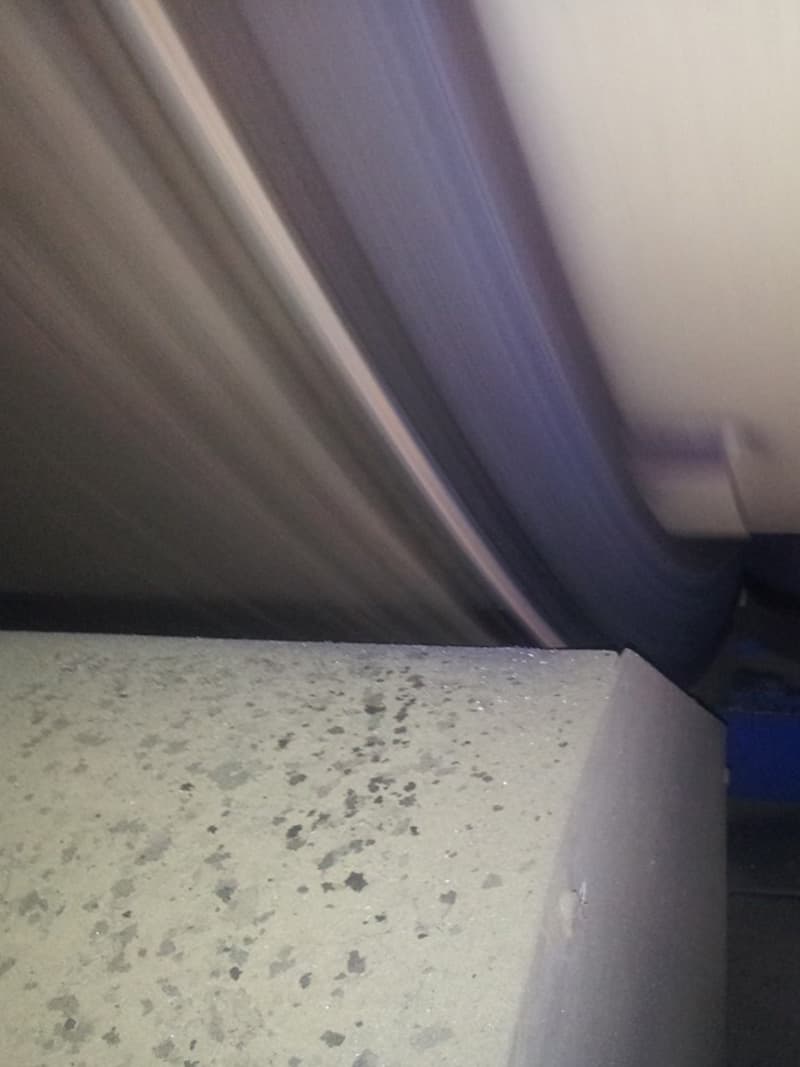
Visible marks
Trunnions and riding rings are exposed to high mechanical loads in operation. Metal contact leaves marks that can affect the availability of the entire system.
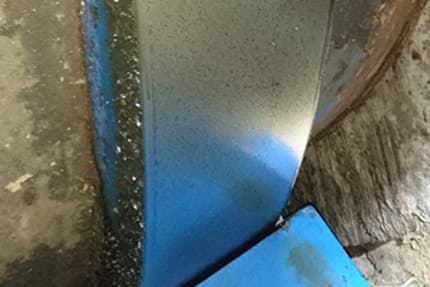
Abrasion, pitting and grooves
Metal abrasion next to the contact point, pitting and groove formation are typical wear patterns. If affected components stay in service, maintenance effort and the risk of downtime increase.
Account for operating conditions
Hardness, diameter, temperature and load influence service life. The protection system is therefore matched to the specific system and the actual condition of the contact surfaces.
Protect early
Preventive wear protection can reduce the need for measures such as replacing trunnions or turning riding rings. The basis is an on-site assessment.
The contact.
Before and after use
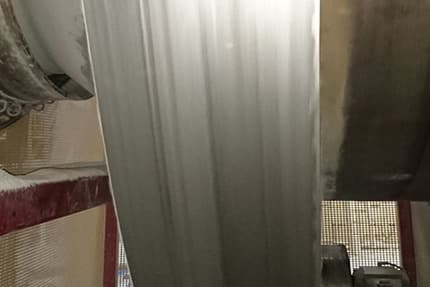
The application images show the trunnion-riding ring contact before and after use of a dry protection system.
The contact point
decides
Different motions and loads meet on a rotary kiln. DRR and KRL® target different contact points.
DRR: trunnion and riding ring
The dry coating is applied to the trunnion and transferred to the riding ring. The focus is the direct contact between the two rolling metal surfaces.
KRL®: riding ring and wear plate
The solid lubricant bars are placed between the riding ring and the wear plate. There they melt and supply the sliding contact surfaces.
KRL® in detail
Frequently asked
questions
These are the questions we get asked most often. If yours is not here, we will answer it directly.
Ready for less
downtime?
What marks do the trunnions and riding rings of your system show? Together we assess the condition on site and match the dry wear protection to your operating conditions.