
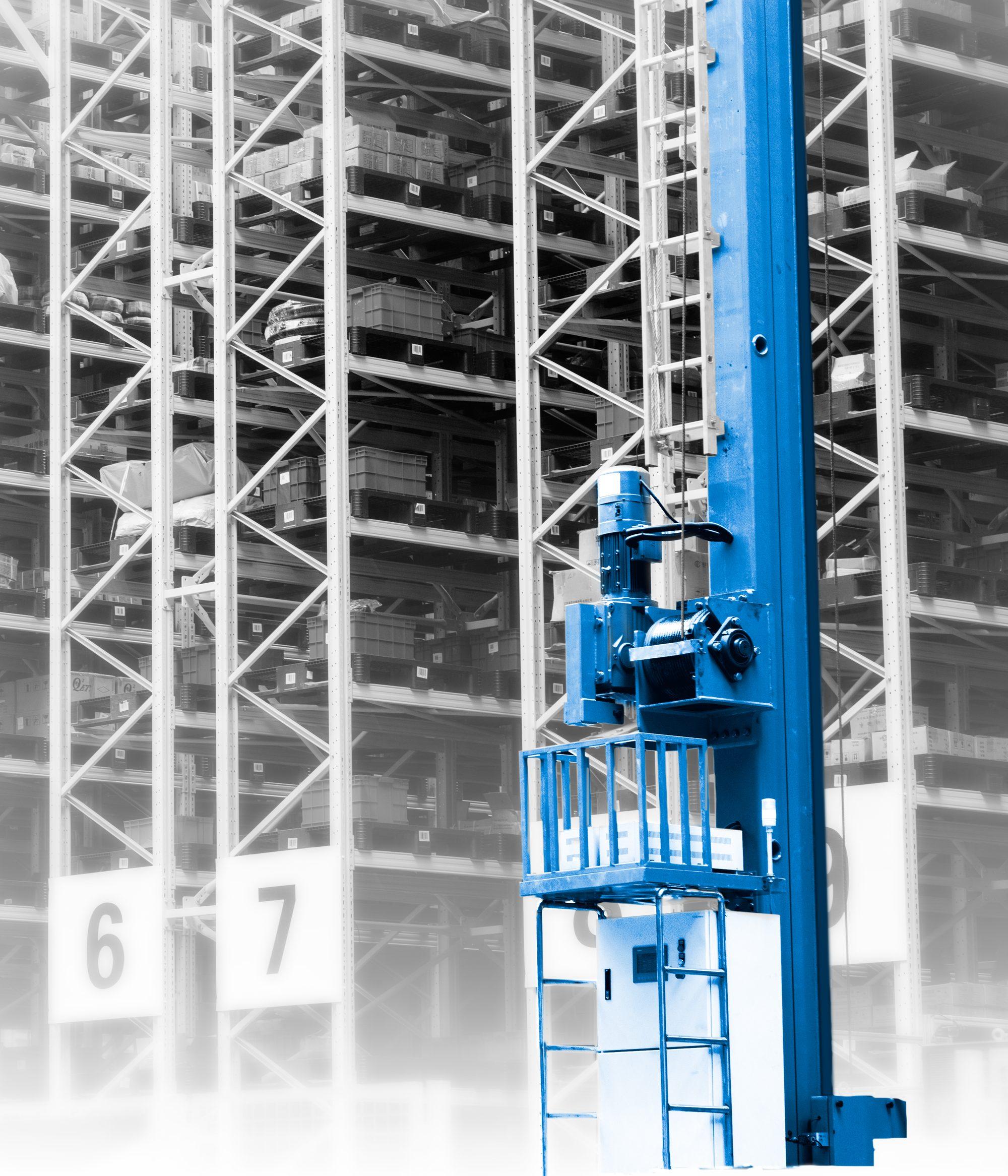
Four system types.One principle
AS/RS stacker cranes, container and overhead cranes and rotating equipment differ in load, cycle rate and environment. How wear is handled decides availability and operating costs for all of them. We support all four system types on the same principle: prevention instead of repair.
Your system.
Our package of measures
Every system type has its own wear pattern and needs its own package of measures. The profiles show where wear typically starts on your system and how we counter it.
Dynamic. Precise. Under constant load.
Automated AS/RS stacker cranes work highly dynamically, precisely and mostly 24/7, in high-bay warehouses and logistics centers where delivery capability depends directly on availability.
Typical wear
- Wheel and wheel flange wear
- Irregular rail profiles
- Contaminated conductor rails
Our answer
SPC® wear protection, rail grinding and conductor rail cleaning, as a coordinated package of measures instead of a single measure.
−80%
Reduce wear
SPC® wear protection systems, a dry, solid protective coating, reduce mechanical wear on wheels, rails and riding rings by up to 80%.
3–5×
Extend service life
Less wear extends the service life of wear parts by a factor of three to five.
24/7
Optimize utilization
Preventive maintenance reduces planned and unplanned downtime across all four system types.
9+
Industries served
From steel, automotive and foundries to ports and shipyards, and on to the paper, pharma and food industries.
Frequently asked
questions
These are the questions we get asked most often. If yours is not here, we will answer it directly.
Good maintenance
starts with a
conversation.
Whether it is a specific challenge, planned maintenance or questions about our products: tell us what you need. Together we will work out how dMT Ecotech can help you reduce wear and keep your systems running reliably.